










Humans have always been driven to enhance their quality of his limited time on earth. This motivation, together with curiosity and creativity, has led man to develop science and technology that were previously unimaginable. And it is that as Arthur C. Clarke wrote in his book Profiles of the future, “Any sufficiently advanced technology is indistinguishable from magic”.
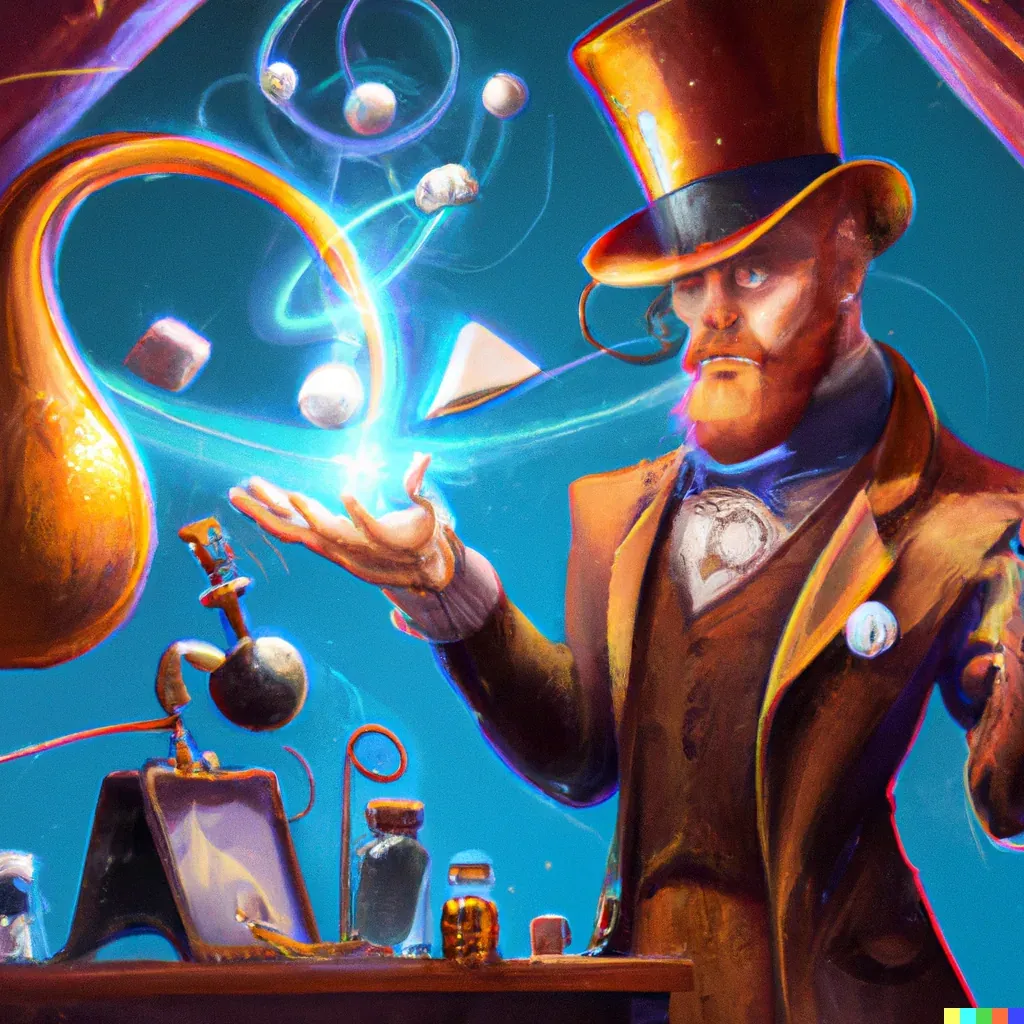
DALL·E promt: A magician teaching a new scientific and technological invention, very detailed, digital art
In this series, we will explore some of the groundbreaking technologies that are currently being developed, and which have the potential to revolutionize our species. It’s important to remember that the realization of these advances can take many years, especially when it comes to transformative technologies. So, before we begin, let’s take a step back and consider the bigger picture. Our perception of time is often centered around the individual, which is natural. 100 years may seem like a long time to us, as it surpasses the average human lifespan. However, in the grand scheme of human history, it’s only a mere instant.
Just another centuary
Around 200,000 years ago, our biological ancestor, Homo sapiens, was already present across the entire planet. These early humans had developed complex skills, logical and abstract thinking abilities, creative capacity, and even intricate social organizations. It’s been estimated that between 100,000 and 35,000 years ago, our brains underwent a remarkable cognitive revolution, which led to the development of a highly complex language. It’s quite intriguing to think that if we could transport a newborn from 30,000 years ago to our present day, they could adapt to our modern society without much difficulty. They could learn to read, ride a bike, or even play video games, just like any other child of their age.

DALL·E promt: A dirty hairy baby homo sapiens playing video games in prehistoric times, photorealistic style
Around 3500 BC, the first advanced civilizations emerged in Mesopotamia, which is present-day Syria and Iraq. These early civilizations exhibited economic and social organization, culture and writing, as well as art and architecture.
When we consider the history of our modern civilization, 100 years may not seem like a long time, as it represents less than 2% of our total history. It’s important to remember that these modern civilizations only make up less than 10% of the time that humans, with intellectual potential equivalent to our own, have been living on earth. In this relatively brief span of time, humanity has achieved astounding progress in science and technology, and the pace just keeps growing.
Having a long-term perspective on time allows us to fully understand the meaning of the decisions we make. When considering the implications of certain technologies, even looking hundreds of years ahead is not a long time frame, especially in the context of evolution.
The Genetic Scissors
Have you ever heard of a game-changing genetic editing tool called CRISPR? It stands for Clustered Regularly Interspaced Short Palindromic Repeats, and it’s a tool that allows scientists to precisely edit genes in living cells. It’s based on a natural defense mechanism used by bacteria to protect themselves from viral infections.
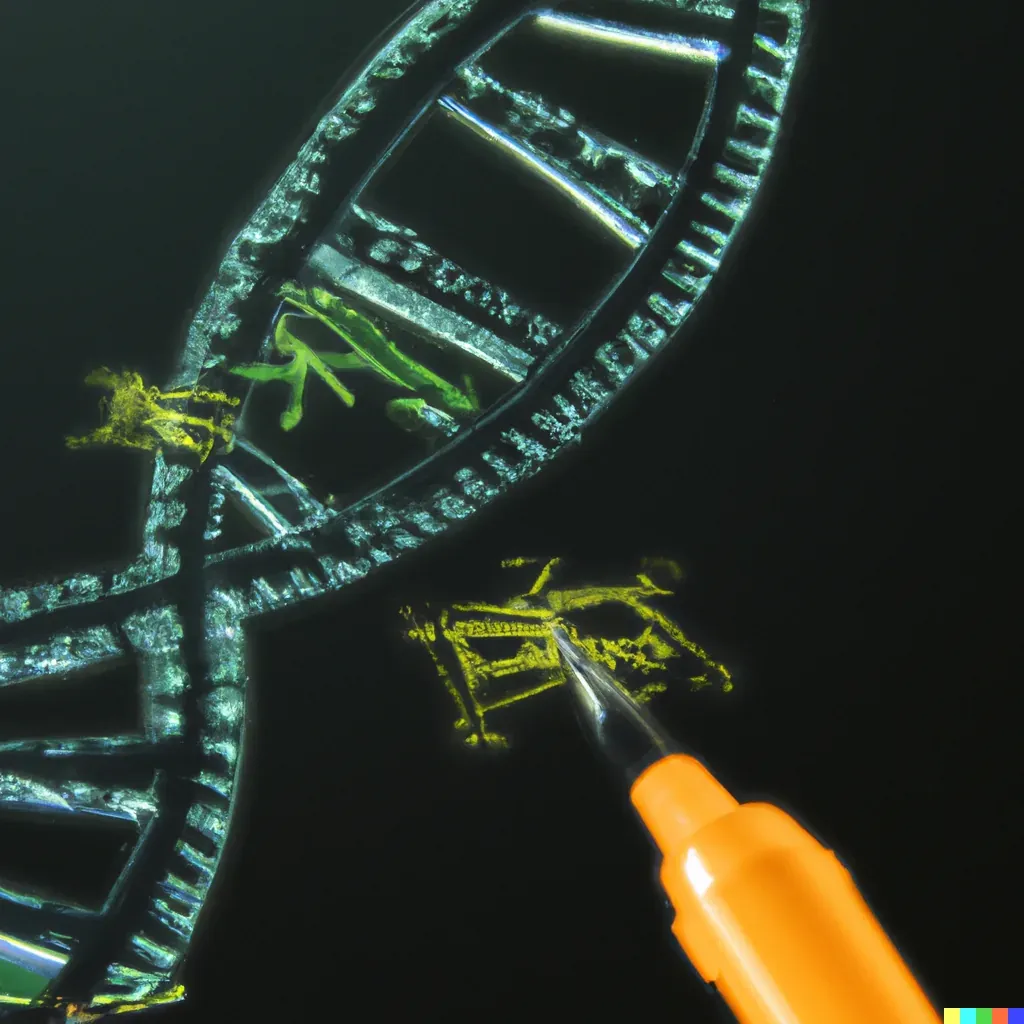
DALL·E promt: Image showing a genetic tool cutting some DNA sequences on a microscopic scale. Animated style.
Imagine if we could use the same natural defense mechanism that bacteria use to protect themselves from viral infections to edit genes in human cells. That’s the basic idea behind the CRISPR gene editing tool. It consists of two key components: the CRISPR sequence and the Cas9 protein.
The CRISPR sequence is a repeating DNA sequence that bacteria use as a molecular “memory bank” to store information about previous viral infections. This sequence makes it possible for the bacteria to search for and bind to viral DNA, which helps them defend against future infections. The Cas9 protein, on the other hand, acts like a pair of molecular scissors that can cut DNA at specific locations.
By harnessing these two components, scientists have created a powerful tool that can be programmed to target specific DNA sequences in living cells. This makes it possible to edit genes with unprecedented precision, such as removing or adding specific genes or altering the function of existing genes.
Innumerable potential benefits
Yes, that’s correct. CRISPR has the potential to revolutionize many fields, from medicine to agriculture and beyond.
For example, in the case of cancer, CRISPR could be used to target and kill cancer cells, or to modify the genome of healthy cells to make them more resistant to cancer and pass these conditions on to future generations.
CRISPR is being used in agriculture to create crops that are resistant to pests, diseases, and environmental factors such as drought. It is also being used to improve the nutritional content of food. All of this can help increase food production and improve food security.
Additionally, CRISPR is being used to engineer microorganisms that can degrade contaminants, aiding in the decontamination of contaminated areas, and can also be engineered to produce biofuels for energy production.
But is it worth it?
It is important to consider the potential risks and ethical implications of CRISPR technology. One concern is the unpredictability of genetic modifications and their potential impacts on organisms and ecosystems. Introducing new forms of life that are not compatible with existing ecosystems could lead to ecosystem disruption and displacement of native species. Additionally, there is a risk of creating organisms that are resistant to antibiotics or other medications, which could have significant public health consequences.
Another controversial area of CRISPR research is the possibility of using it to create “designer babies.” While no such babies have been born, the idea of using CRISPR to select for specific traits such as intelligence, athletic ability, or physical appearance has sparked ethical debates.
In 2018, Chinese scientist He Jiankui claimed to have used CRISPR to edit the genomes of twin babies, making them resistant to HIV. However, it is important to note that using CRISPR does not require large facilities, as the technique has become more affordable and accessible over time. In fact, a basic CRISPR experiment on a simple cell line can cost as little as a few hundred dollars in supplies and reagents.
This increased accessibility has led to some individuals, such as biohacker Josiah Zayner in 2017, attempting to use CRISPR-based gene therapies on themselves without the oversight of a medical professional. For example, Zayner injected himself with a CRISPR-based gene therapy he created in his own apartment to enhance his muscles.
There have also been reports of individuals attempting to create glow-in-the-dark plants or animals using CRISPR, which has raised concerns about the ethical implications of genetically modifying organisms for aesthetic purposes.
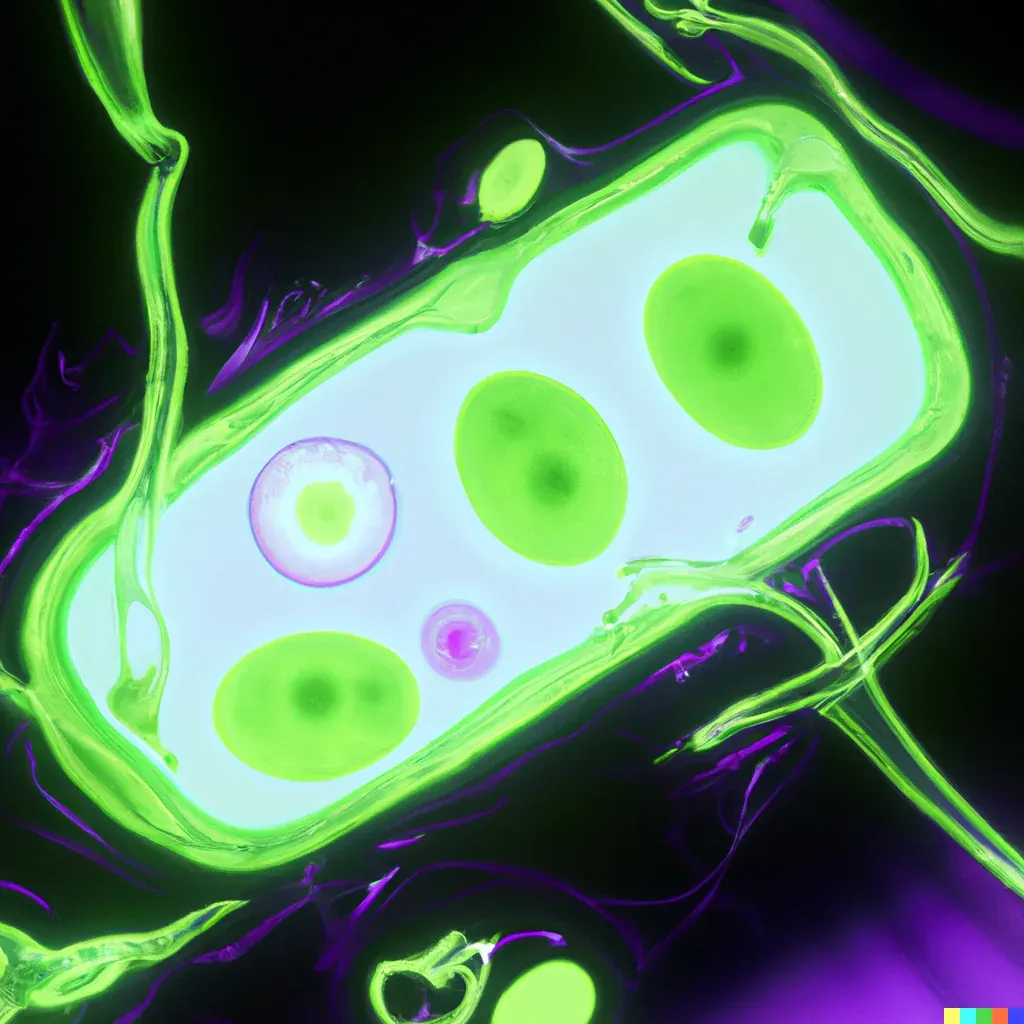
DALL·E promt: Realistic and highly detailed 4k photo of a cell seen up close, where some of its parts glow with a fluorescent color
The end of Darwin’s natural evolution?
Natural evolution is the process by which species of organisms change over time through the gradual accumulation of small genetic variations that confer advantages or disadvantages in specific environments. These variations arise through random genetic mutations and are subject to natural selection, a process described by Charles Darwin which individuals with advantageous traits are more likely to survive and reproduce, passing on those traits to their offspring. Over many generations, these small changes can lead to the development of new species.
Gene editing tools like CRISPR have the potential to dramatically change the course of evolution and could have significant implications for the theory of evolution described by Darwin, challenging the notion that evolution is purely driven by natural selection. Instead, they suggest that evolution can be influenced by human intervention, which may play a significant role in shaping the course of evolution.
It is crucial for society to be well-informed and equipped to confront one of the most significant ethical quandaries humanity has ever encountered, as it not only affects us, but also all life on Earth as we know it. To do this, we need to hear diverse opinions from around the world to inform our decisions about how to use these powerful tools responsibly and ethically. By engaging in thoughtful and open dialogue, we can work towards a future in which genetic modification is used to improve the lives of all people and minimize potential risks and harm.
Originally published on Medium.